

When shopping for gold jewelry, one of the first decisions you will face is choosing the right karat. You may see 22K, 18K, 14K, and sometimes 24K gold, but what do those numbers actually mean? More importantly, which option makes the most sense for your lifestyle, budget, and the type of jewelry you want to wear?
The 22K vs 18K vs 14K gold comparison is not simply about choosing the highest number. Each purity level has different characteristics, including gold content, durability, color, price, and suitability for everyday use.
For shoppers looking for 22K gold jewelry in Dallas, TX, understanding these differences can help you make a more informed decision instead of choosing a piece based only on appearance.
What Do 22K, 18K, and 14K Gold Mean?
The “K” stands for karat and indicates the proportion of pure gold in an alloy. Pure gold is 24 karats.
Here is the basic comparison:
| Gold Type | Approx. Pure Gold Content | General Characteristics |
| 24K | 99.9% | Very pure, soft, less suitable for most everyday jewelry |
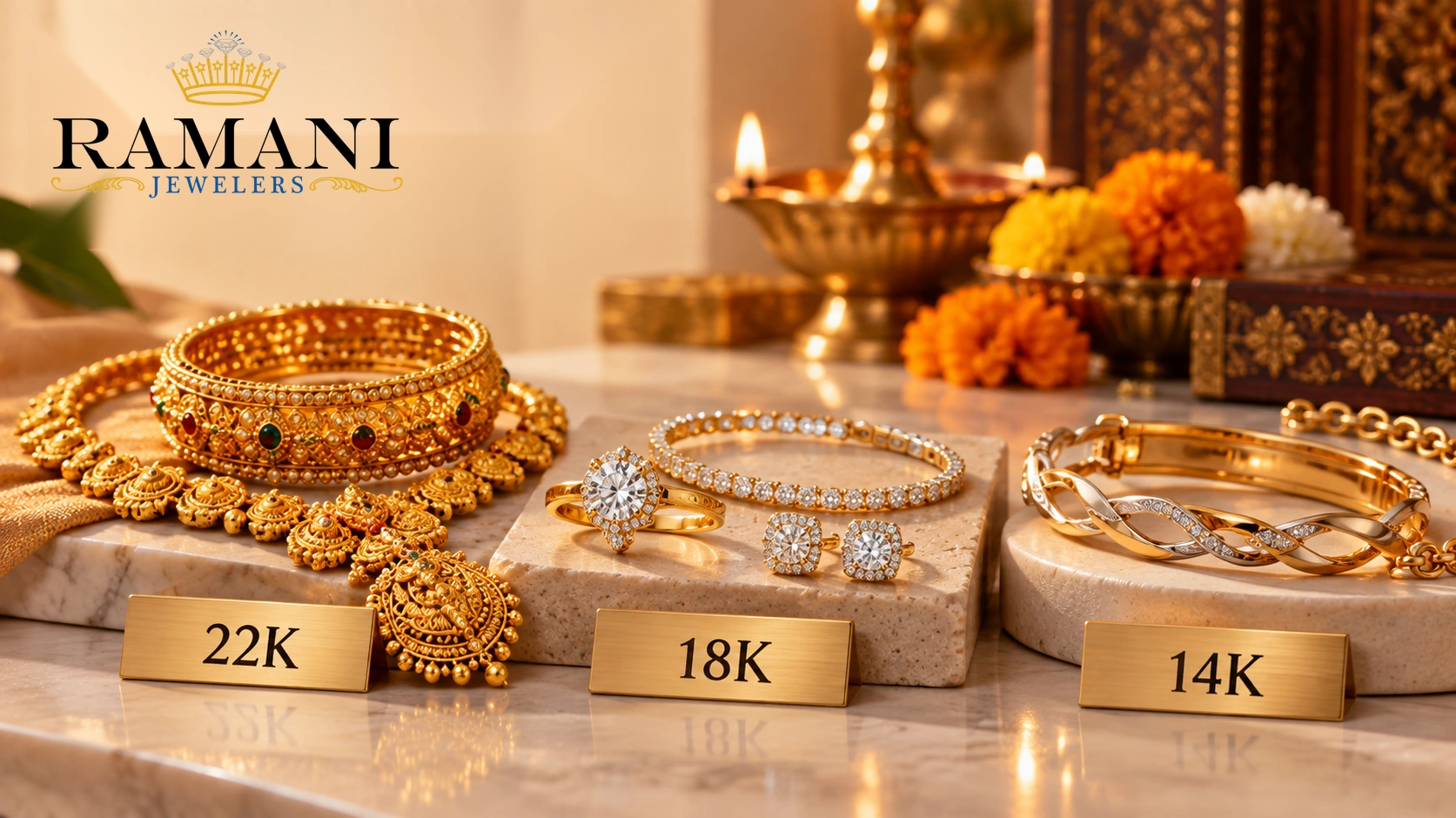
| 22K | 91.6% | Rich yellow color, high purity, popular for traditional jewelry |
| 18K | 75% | Good balance of purity, appearance, and durability |
| 14K | 58.5% | Stronger and generally more affordable for frequent wear |
The remaining percentage is made up of other metals such as copper, silver, zinc, or palladium. These additional metals make the jewelry harder and more practical to wear.
22K vs 24K Gold: What Is the Difference?
One common question is the difference between 22K and 24K gold.
24K gold is considered virtually pure gold, while 22K gold contains about 91.6% pure gold. Because pure gold is relatively soft, 24K gold is not generally the first choice for jewelry that will experience frequent impact, bending, or friction.
22K gold contains a small amount of other metals, giving it greater structural strength while maintaining a high gold content and the warm yellow appearance many people associate with traditional Indian jewelry.
For jewelry intended to be worn regularly, 22K often offers a more practical balance than 24K.
22K Gold: Best for Traditional Indian Jewelry?
22K gold is especially popular in Indian jewelry because of its high gold content, rich color, and traditional appeal. It is commonly seen in necklaces, bangles, earrings, chains, and other heritage-inspired pieces.
For shoppers considering 22K gold jewelry in Dallas, TX, this purity can be particularly attractive when the goal is to own substantial gold content while still having a piece designed for actual wear.
However, 22K gold is softer than 18K and 14K gold. That means intricate pieces or jewelry exposed to constant friction may require more care.
So, is 22K gold good for daily wear? The answer is yes, but with some considerations. A simple chain, pendant, or carefully designed ring may work well for regular use, while delicate, highly detailed pieces may be better reserved for occasions where they are less likely to be scratched or damaged.
18K Gold: The Middle Ground
18K gold contains 75% pure gold, making it a popular compromise between higher-purity gold and greater durability.
It typically has a rich gold appearance while being harder than 22K gold. This makes 18K particularly appealing for people who want a premium piece but expect to wear it frequently.
Engagement rings and wedding jewelry are common examples where 18K can be an excellent choice because the jewelry is often worn daily and needs to handle normal activity.
You can explore styles designed specifically for these occasions in the engagement and wedding collection.
18K is also a good option for shoppers who want a balance between gold purity and resistance to everyday wear without moving all the way down to 14K.
14K Gold: Practical for Everyday Wear
14K gold contains approximately 58.5% pure gold, with the remainder made up of other metals. Because of this composition, it is generally harder and more resistant to everyday wear than 18K or 22K gold.
That makes 14K a practical choice for people who rarely remove their jewelry. Rings, bracelets, earrings, and chains made from 14K gold can be suitable for busy lifestyles where jewelry is exposed to frequent movement and contact.
Another advantage is price. Since 14K gold contains less pure gold than 18K or 22K, it is generally more accessible for buyers working with a lower budget.
The trade-off is that its color can be somewhat less intensely yellow than higher-karat gold.
Which Gold Is Best for Daily Wear?
There is no universal winner because “best” depends on how the jewelry will be used.
If your priority is high gold purity and traditional appearance, 22K may be the preferred choice.
If you want a balance between purity, luxury, and durability, 18K is often an excellent middle option.
If durability, frequent wear, and affordability are your top priorities, 14K may be more appropriate.
Think about the individual piece as well. A simple pendant may perform differently from a large ring exposed to constant friction. Lifestyle matters just as much as karat.
How to Check Gold Purity and Hallmark
One of the most important things to understand before buying gold jewelry is how to verify its purity.
When learning how to check gold purity and hallmark, look for the purity marking or hallmark associated with the jewelry. Depending on the market and certification system, markings may identify the karat or fineness of the gold.
For example:
- 22K gold is commonly associated with 916 fineness.
- 18K gold is commonly associated with 750 fineness.
- 14K gold is commonly associated with 585 fineness.
Do not rely solely on appearance. Two pieces may look nearly identical while having significantly different gold content.
It is also important to purchase from a jeweler who provides clear product information and documentation. Before buying, ask about purity, weight, craftsmanship charges, and the terms associated with exchanges or future services.
How Gold Color Changes with Karat
Karat is not the only factor that affects the appearance of gold. The other metals used in the alloy also influence its color.
Higher-purity yellow gold generally has a richer, warmer appearance. Lower-karat gold may have a slightly lighter tone depending on its composition.
You may also encounter white gold and rose gold. These can contain the same general gold purity levels but use different alloy combinations to achieve their distinctive colors.
As a result, two 18K pieces can look different even though both contain the same proportion of pure gold.
22K vs 18K vs 14K: Which Should You Buy?
The right answer ultimately depends on your priorities.
Choose 22K when high gold content, traditional Indian styling, and a rich yellow appearance are especially important.
Choose 18K when you want an upscale piece with a strong balance between purity and durability.
Choose 14K when you prioritize everyday practicality, durability, and a more accessible price point.
For major purchases, it can also help to compare several designs in person rather than making a decision entirely from photos. A trusted gold jewelry store in Richardson, TX can help you understand how different karats feel, look, and fit your intended use.
Why Choosing the Right Jeweler Matters
Gold purity is only one part of a good jewelry purchase. The jeweler you choose also matters.
A reputable jeweler should be willing to explain the purity, weight, craftsmanship, pricing, and care requirements of a piece without making the process unnecessarily complicated.
Ramani Jewelers provides jewelry options for customers looking for traditional and contemporary styles. You can also learn more about the company’s background and approach through the About Us page.
If you have questions about a particular piece or want help choosing between different karat options, you can contact Ramani Jewelers before making your purchase.
For common jewelry-related questions, the FAQ page is also a useful resource.
You can also browse the Ramani Jewelers blog for additional information about gold jewelry, buying considerations, and care.
Final Thoughts
The 22K vs 18K vs 14K gold decision comes down to finding the right balance between purity, durability, appearance, and budget.
22K is a strong choice for buyers who value high gold content and traditional Indian jewelry. 18K offers an attractive middle ground for people who want both premium gold content and everyday durability. 14K is often the practical choice for active lifestyles and frequent wear.
Instead of asking which karat is “best” in general, ask which karat is best for the specific piece you are buying and how you plan to wear it. With that approach, you can choose jewelry that looks beautiful today and continues to suit your lifestyle for years to come.
FAQs
Is 22K gold better than 18K gold?
22K gold has a higher percentage of pure gold than 18K gold, so it offers greater gold content and a richer yellow appearance. However, 18K gold is harder and generally more durable for frequent everyday use. The better choice depends on whether purity or durability is your main priority.
Is 22K gold good for daily wear?
Yes, 22K gold can be worn daily, particularly for simpler jewelry such as chains, pendants, or certain earrings. However, it is softer than 18K and 14K gold, so pieces exposed to frequent impact or friction may require additional care.
What is the difference between 22K and 24K gold?
24K gold is nearly pure gold, while 22K gold contains approximately 91.6% pure gold. Because 24K gold is softer, 22K is generally more practical for jewelry that needs some additional strength while still retaining high gold content.
How can I check the purity of gold jewelry?
Look for the appropriate purity or fineness marking on the piece and ask the jeweler for complete product documentation. Common fineness references include 916 for 22K, 750 for 18K, and 585 for 14K. Buying from a reputable jeweler adds another layer of confidence.
Which gold is best for an engagement ring?
18K and 14K gold can both be strong choices for engagement rings because they provide more durability than 22K gold. The best option depends on your preferred color, budget, lifestyle, and desired balance between gold purity and strength.